 Skip to content
Boy Scout Patch Placement Guide: BSA Uniforms and More
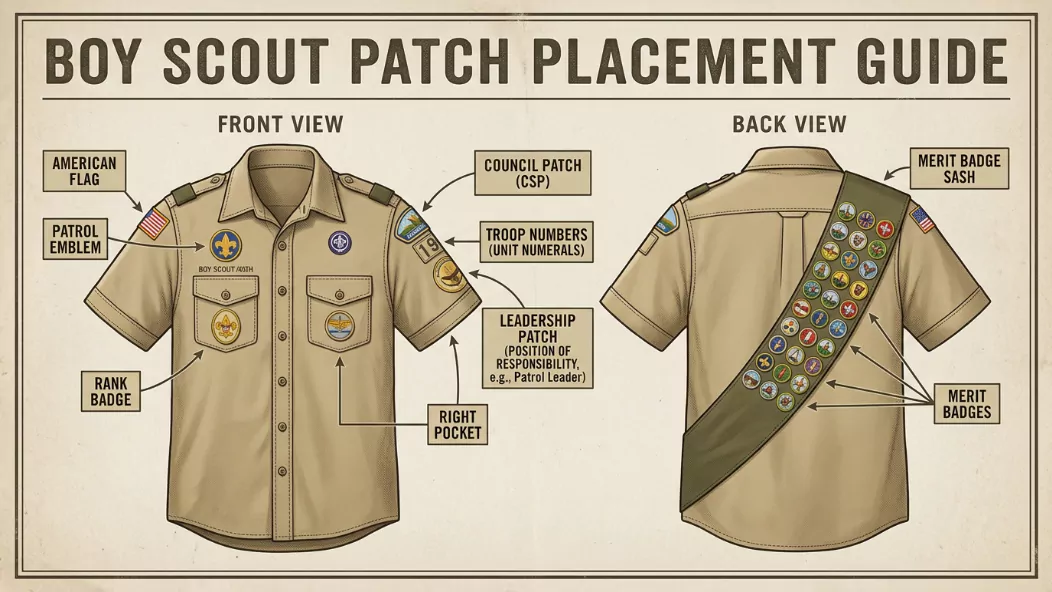
Boy Scout uniforms display rank, leadership, troop identity, and earned achievements clearly. Proper patch placement keeps uniforms organized and officially structured. Scouts BSA uniforms also follow official insignia placement guidelines carefully.
Different Scout patches belong in different uniform placement sections. Some patches stay on sleeves, pockets, or merit badge sashes. Placement rules also vary between Cub Scouts and Scouts BSA uniforms.
Official Scout uniforms contain rank patches, merit badges, patrol emblems, and leadership insignia. Temporary patches represent events, camp activities, and scouting memories. Merit badges display skill achievements and advancement progress clearly.
The left sleeve, right sleeve, pockets, and sash each serve different purposes. Correct placement improves badge visibility and overall uniform appearance significantly. Understanding patch categories first makes official placement rules easier to follow.
Understanding Boy Scout Patches and Insignia
Boy Scout uniforms contain different patch types and official insignia categories. Every patch represents advancement, leadership, troop identity, or activity participation. Correct placement helps uniforms remain organized and professionally structured.
| Item | Purpose | Placement |
| Rank Patches | Advancement recognition | Left pocket |
| Merit Badges | Skill achievements | Merit badge sash |
| Patrol Emblems | Patrol identity | Right sleeve |
| Temporary Patches | Event participation | Right pocket |
| Position Patches | Leadership roles | Left sleeve |
Rank patches represent advancement progress across different Scout levels and achievements. These patches normally stay centered on the left pocket section. Rank placement helps identify Scout advancement and leadership development quickly.
Merit Badges
Merit badges show completed skills, activities, and learning achievements clearly. These badges belong on the official merit badge sash only. Organized badge placement improves sash appearance and badge visibility significantly.
Patrol Emblems
Patrol emblems represent troop groups, patrol identity, and teamwork recognition visually. These patches normally stay on the right sleeve section carefully. Patrol patches help Scouts identify troop groups during activities and events.
Temporary Patches
Temporary patches celebrate camp events, jamborees, and scouting participation activities. These patches usually stay centered on the right pocket area. Scouts officially display only one temporary patch at a time. Understanding these categories makes official uniform placement rules easier to follow.
Official Boy Scout Uniform Patch Placement Rules
Boy Scout uniforms follow official placement rules for patches and insignia carefully. Every uniform section holds specific badges, awards, and identification patches. Correct placement improves organization and official uniform appearance significantly.
Left Sleeve Placement
The left sleeve contains troop identification and leadership-related insignia patches. Common left sleeve placement items include:
- Council shoulder patch
- Unit numerals
- Veteran unit bar
- Badge of office
These patches identify troop membership and leadership responsibilities clearly. Organized sleeve layouts improve patch visibility and structure significantly.
Right Sleeve Placement
The right sleeve mainly displays national and patrol-related insignia patches. Common right sleeve placement items include:
- American flag patch
- Patrol emblem
- Journey to Excellence patch
- National Honor Patrol emblem
These patches represent patrol identity and troop recognition achievements visually. Correct placement keeps sleeves balanced and professionally organized.
Left Pocket Placement
The left pocket displays advancement and recognition-related Scout insignia clearly. Common left pocket placement items include:
- Rank patch
- Knot awards
- Interpreter strip
Rank patches stay centered directly on the left pocket section. Proper spacing improves advancement badge visibility and organization quality.
Right Pocket Placement
The right pocket mainly holds temporary event and participation patches officially. Scouts usually display only one temporary patch at once. Camporee patches and jamboree patches commonly appear in this section.
Merit Badge Sash Placement
Merit badges belong on the official merit badge sash only. Organized badge rows improve sash visibility and professional appearance greatly. Order of the Arrow sashes follow different official placement rules. Understanding these placement areas helps explain Cub Scout patch organization systems next.
Cub Scout Patch Placement Guide
Cub Scout uniforms use different patch placement systems than Scouts BSA uniforms. Placement changes across Lion, Tiger, Wolf, Bear, and Webelos levels. Proper organization keeps Cub Scout uniforms clean and officially structured.
Lion Patch Placement
Lion uniforms contain simple badges and beginner Scout recognition patches mainly. Most Lion patches stay on the front uniform sections carefully. Organized layouts help parents manage early Scout badge placement easily.
Tiger, Wolf, and Bear Patch Placement
Tiger, Wolf, and Bear uniforms use diamond-shaped rank badge arrangements. These rank patches stay centered on the left pocket section. Each earned rank creates part of the complete diamond structure. Proper spacing improves visibility and badge organization significantly.
Webelos Patch Placement
Webelos uniforms use oval-shaped rank badges instead of diamond arrangements. The Webelos badge stays centered on the left pocket section. Webelos uniforms also contain additional activity and leadership recognition patches.
Arrow of Light Placement
Arrow of Light represents the highest Cub Scout advancement achievement level. This award stays properly aligned on official uniform sections carefully. Organized placement improves visibility and advancement recognition significantly.
Temporary Patch Placement
Cub Scouts also display temporary event and camp participation patches officially. These patches usually stay centered on the right pocket section. Scouts should officially wear only one temporary patch simultaneously. Understanding Cub Scout placement systems helps explain advanced Scouts BSA uniform organization next.
Scouts BSA Uniform Patch Placement
Scouts BSA uniforms contain advanced rank, leadership, and achievement patch systems. Proper placement keeps uniforms organized and officially structured during scouting activities. Scouts BSA uniforms also contain more badges than Cub Scout uniforms.
Rank Patch Placement
Rank patches stay centered directly on the left pocket section carefully. These patches represent advancement progress through different Scout achievement levels. Scout, Tenderfoot, First Class, Star, Life, and Eagle ranks follow identical placement rules. Proper alignment improves badge visibility and uniform organization significantly.
Patrol Patch Placement
Patrol emblems stay positioned on the right sleeve section officially. These patches represent patrol identity, teamwork, and troop organization systems clearly. Different patrols commonly use animal-themed emblem patch designs. Organized placement improves troop identification during events and outdoor activities.
Position Patch Placement
Leadership position patches stay on the left sleeve section carefully organized. These patches identify troop leadership responsibilities and official Scout positions clearly. Common positions include Patrol Leader and Senior Patrol Leader roles. Proper spacing improves leadership patch visibility and recognition significantly.
Trained Patch Placement
Trained patches represent completed leadership and Scout training achievements officially. These patches usually stay below leadership position insignia carefully aligned. Organized placement improves uniform balance and recognition visibility significantly.
Interpreter Strip Placement
Interpreter strips display language skills and communication achievements clearly on uniforms. These strips normally stay above the right pocket section carefully. Proper alignment improves readability and uniform appearance significantly. Merit badge placement follows additional sash organization rules next.
Merit Badge Placement Guide
Merit badges represent completed Scout skills, learning, and achievement progress clearly. These badges belong only on the official merit badge sash. Organized badge placement improves sash appearance and badge visibility significantly.
Merit Badge Sash Placement
Scouts sew merit badges onto the front sash section carefully organized. Badges normally follow straight rows for better visibility and structure. Proper spacing helps merit badges remain readable and professionally displayed.
Eagle-Required Merit Badges
Some merit badges are required for Eagle Scout advancement achievements officially. These badges represent leadership, citizenship, outdoor skills, and personal development. Organized placement improves recognition of important advancement accomplishments significantly.
Optional Merit Badges
Optional merit badges represent additional skills and personal Scout interests clearly. Scouts earn badges through hobbies, sports, science, and outdoor activities. Proper organization keeps sash layouts balanced and visually organized longer.
Merit Badge Sash Rules
Only merit badges should appear on the official merit badge sash. Temporary patches and unrelated insignia should stay separate from sash areas. Order of the Arrow sashes follow completely different placement guidelines officially. Organized layouts improve overall sash structure and professional appearance significantly.
Merit Badge Organization Tips
Planning badge spacing helps prevent overcrowded merit badge sash layouts later. Straight badge rows improve readability and overall visual organization significantly. Balanced layouts also support future merit badge additions properly. Temporary patches follow different placement rules than merit badges and awards.
Temporary Patch Placement Rules
Temporary patches represent camp events, jamborees, and special scouting activity participation. These patches follow different rules than official advancement and merit badges. Proper placement keeps Scout uniforms organized and officially structured.
Official Temporary Patch Placement
Temporary patches stay centered directly on the right pocket section officially. Scouts should display only one temporary patch at one time. Correct placement improves visibility and overall uniform organization significantly.
Common Temporary Patch Types
Many Scouts collect temporary patches from different scouting events and activities. Common temporary patch examples include:
- Camporee patches
- Jamboree patches
- Summer camp patches
- Hiking event patches
- Community service patches
These patches mainly represent participation and memorable scouting experiences.
Temporary Patch Holders
Some Scouts use hanging patch holders for temporary patch display organization. These holders attach directly through the right pocket button area. Patch holders support quick patch replacement during different scouting events.
Temporary Patch Organization Tips
Large temporary patches should stay balanced within right pocket placement areas carefully. Organized positioning improves patch readability and professional uniform appearance significantly. Crowded layouts reduce visibility and overall badge organization quality.
Temporary Patch Placement Mistakes
Many Scouts incorrectly place multiple temporary patches simultaneously on uniforms. Others position patches outside official right pocket placement areas incorrectly. Following official guidelines improves uniform consistency and proper patch organization. Rank patch placement follows additional advancement-specific placement rules next.
Rank Patch Placement Guide
Rank patches represent advancement progress across different Scouts BSA achievement levels clearly. These patches show leadership growth, completed requirements, and scouting experience visually. Proper placement keeps advancement badges organized and professionally displayed.
| Rank | Placement |
| Scout | Left pocket |
| Tenderfoot | Left pocket |
| Second Class | Left pocket |
| First Class | Left pocket |
| Star | Left pocket |
| Life | Left pocket |
| Eagle Scout | Left pocket |
Scout to First Class Placement
Scout, Tenderfoot, Second Class, and First Class ranks follow identical placement rules. These patches stay centered directly on the left pocket section. Organized alignment improves visibility and advancement badge readability significantly.
Star and Life Rank Placement
Star and Life ranks represent advanced leadership and scouting achievement progress clearly. These patches also stay centered on the left pocket section. Proper spacing improves uniform balance and official badge organization quality.
Eagle Scout Patch Placement
Eagle Scout represents the highest Scouts BSA advancement achievement officially recognized. Eagle Scout patches stay centered carefully on the left pocket section. Organized placement improves recognition visibility and professional uniform appearance significantly.
Rank Patch Organization Tips
Straight patch alignment improves advancement visibility and uniform structure significantly. Many Scouts plan spacing before permanent patch attachment methods carefully. Balanced layouts help uniforms remain organized during future badge additions. Patrol patch placement also follows important troop identity organization rules next.
Patrol Patch Placement
Patrol patches represent troop groups, teamwork, and Scout patrol identity clearly. These patches help Scouts identify patrol members during scouting activities and events. Proper placement keeps uniforms balanced and officially organized visually.
Official Patrol Patch Placement
Patrol emblems stay positioned on the right sleeve section officially. These patches usually appear below the American flag patch carefully aligned. Organized placement improves patrol recognition and uniform structure significantly.
Patrol Patch Designs
Many patrols use animal-themed emblem patches for troop identification purposes. Common patrol patch examples include:
- Eagle patrol
- Wolf patrol
- Panther patrol
- Falcon patrol
- Bear patrol
These patches strengthen teamwork and patrol identity during scouting activities.
Patrol Identity Importance
Patrol systems help Scouts develop teamwork, leadership, and communication skills effectively. Patrol emblems create stronger group recognition and troop organization visually. Organized placement improves patrol visibility during camps and outdoor events.
Patrol Patch Organization Tips
Straight patch alignment improves sleeve balance and overall uniform appearance greatly. Many Scouts organize sleeve spacing before permanent patch attachment carefully. Balanced layouts improve readability and professional patch presentation significantly.
Choosing Quality Patrol Patches
High-quality embroidered and PVC patrol patches improve durability and stitching performance significantly. Strong backing options help patches remain secure during outdoor scouting activities. Many troops prefer personalized troop and patrol patch designs for better recognition. Order of the Arrow patches follow additional official placement rules next.
Order of the Arrow Patch Placement
Order of the Arrow patches follow special Scouts BSA placement guidelines carefully. These patches represent honor society membership and leadership recognition within scouting programs. Proper placement keeps uniforms organized and officially structured visually.
Lodge Flap Placement
Lodge flaps stay attached directly on the right pocket uniform flap officially. These patches identify local Order of the Arrow lodge membership clearly. Proper alignment improves visibility and overall uniform organization significantly.
OA Sash Placement
Order of the Arrow sashes follow separate official sash placement rules carefully. Scouts wear the OA sash across the shoulder during approved events. Merit badges should never appear on Order of the Arrow sashes.
OA Patch Usage Rules
Order of the Arrow patches should follow official Scouts BSA usage guidelines. Correct placement helps maintain proper insignia organization and recognition visibility. Organized layouts improve professional uniform appearance during scouting ceremonies and activities.
Common OA Placement Mistakes
Many Scouts incorrectly place merit badges on OA sashes mistakenly. Others position lodge flaps outside official pocket flap placement areas. Following official guidelines improves uniform consistency and patch organization significantly.
OA Patch Organization Tips
Straight patch alignment improves readability and professional uniform appearance greatly. Many Scouts plan sash and pocket spacing before patch attachment carefully. Proper organization keeps Order of the Arrow insignia visually balanced and structured. Proper attachment methods also improve long-term patch durability and placement stability.
How to Attach Boy Scout Patches
Scout patches use different attachment methods for uniforms and merit badge sashes. Proper attachment improves durability, organization, and long-term patch appearance significantly. Many Scouts choose methods based on convenience and patch durability needs.
Iron-On Patches
Iron-on patches use heat and adhesive backing for quick attachment methods. Many parents prefer iron-on patches for faster uniform organization tasks. Proper heat application improves patch durability and attachment strength significantly.
Sew-On Patches
Sew-on patches provide stronger and longer-lasting uniform attachment performance consistently. Many troop leaders prefer sewn patches for official Scout uniforms. Stitching reduces peeling during outdoor scouting activities and repeated washing.
Velcro Patches
Velcro patches support removable placement for changing uniforms and temporary insignia. Many Scouts use Velcro for tactical uniforms and event flexibility. This method supports quick patch replacement during scouting activities and camps.
Patch Attachment Tips
Planning patch spacing before attachment improves uniform organization and readability significantly. Straight rows help patches appear balanced and professionally structured visually. Temporary positioning also reduces incorrect placement and alignment problems later.
Choosing Quality Scout Patches
High-quality Scout patches improve stitching, durability, and uniform appearance significantly. Strong backing options help patches remain secure during outdoor scouting activities. Proper attachment methods also reduce patch damage and peeling problems later. Incorrect placement and attachment often create common uniform organization mistakes next.
Common Boy Scout Patch Placement Mistakes
Many Scouts place patches incorrectly during uniform organization and badge arrangement activities. Incorrect placement affects visibility, structure, and official uniform appearance significantly. Understanding common mistakes improves overall patch placement accuracy and organization.
Incorrect Temporary Patch Placement
Temporary patches should stay centered directly on the right pocket section officially. Many Scouts incorrectly place multiple temporary patches simultaneously on uniforms. Correct placement improves consistency and official uniform organization significantly.
Sewing Merit Badges on Uniform Shirts
Merit badges belong only on the official merit badge sash carefully organized. Some Scouts incorrectly sew merit badges directly onto uniform shirts. Proper sash placement improves badge visibility and official uniform structure significantly.
Incorrect Patrol Patch Positioning
Patrol emblems should stay positioned on the right sleeve section carefully. Incorrect placement reduces patrol visibility and uniform balance significantly. Organized alignment improves troop identification during scouting activities and camps.
Uneven Badge Spacing
Uneven spacing makes Scout uniforms appear disorganized and visually crowded quickly. Straight rows improve readability and professional uniform appearance significantly. Many Scouts plan layouts before permanent patch attachment methods carefully.
Overcrowded Merit Badge Sashes
Crowded sashes reduce merit badge visibility and overall organization quality significantly. Proper spacing helps badges remain readable and professionally arranged visually. Planned layouts also support future merit badge additions properly.
Wrong Sleeve Patch Placement
Many Scouts confuse left sleeve and right sleeve placement sections incorrectly. Official placement charts help organize insignia correctly across uniform areas. Proper organization improves patch visibility and overall uniform structure significantly. Good organization also supports better uniform inspection and presentation quality.
Boy Scout Uniform Inspection Tips
Uniform inspection helps Scouts maintain organized and officially structured patch placement consistently. Proper inspections improve badge visibility and professional uniform appearance significantly. Clean uniforms also reflect discipline, leadership, and scouting responsibility clearly.
Keep Patches Straight
Straight patch rows improve readability and overall uniform organization significantly. Crooked patches reduce visibility and professional appearance during scouting activities. Many Scouts check alignment before permanent patch attachment carefully.
Maintain Clean Badge Spacing
Balanced spacing helps badges remain visible and visually organized longer. Crowded layouts make uniforms appear messy and difficult to understand quickly. Organized spacing improves readability during inspections and troop events significantly.
Check Patch Stitching
Strong stitching improves patch durability during outdoor scouting activities and camps. Loose stitching may cause patch peeling and placement problems later. Regular inspection helps Scouts identify damaged patches quickly and correctly.
Follow Official Placement Charts
Official placement charts help Scouts organize insignia correctly across uniform sections. Correct placement improves consistency between troop uniforms and leadership inspections. Visual charts also simplify badge organization for parents and leaders.
Keep Uniforms Clean
Clean uniforms improve patch visibility and overall professional appearance significantly. Dirt and wrinkles reduce badge readability during troop inspections and ceremonies. Proper care helps uniforms remain organized and visually balanced longer. Many Scouts still have placement questions requiring simple and direct answers next.
FAQs
Where do Boy Scout patches go?
Patch placement depends on patch type and uniform placement section carefully. Some patches stay on sleeves, pockets, or merit badge sashes. Official placement charts help organize badges correctly across uniforms.
Where does the rank patch go?
Rank patches stay centered directly on the left pocket section officially. These patches represent advancement progress and leadership development achievements clearly. Organized alignment improves visibility and professional uniform appearance significantly.
Where do temporary patches go?
Temporary patches stay centered on the right pocket section carefully organized. Scouts officially display only one temporary patch at one time. Camporee and jamboree patches commonly appear in this placement area.
Can Scout patches be ironed on?
Many Scout patches support iron-on backing for easier attachment methods. Heat helps patches remain secure during scouting activities and washing cycles. Proper attachment improves patch durability and overall uniform appearance significantly.
Where do merit badges go?
Merit badges belong only on the official merit badge sash carefully organized. Straight badge rows improve visibility and sash organization significantly. Proper spacing also supports future merit badge additions correctly.
Where does the patrol patch go?
Patrol emblems stay positioned on the right sleeve section officially. These patches represent patrol identity and troop organization systems clearly. Organized placement improves visibility during troop activities and camps significantly.
How many temporary patches can Scouts wear?
Scouts officially wear only one temporary patch at one time. Correct placement helps uniforms remain organized and visually balanced consistently. Proper organization also improves inspection and badge visibility significantly.
Conclusion
Boy Scout patch placement helps uniforms stay organized, balanced, and officially structured consistently. Proper placement improves badge visibility and professional uniform appearance during scouting activities. Every patch section serves different leadership and advancement purposes clearly.
Rank patches, merit badges, patrol emblems, and temporary patches follow different placement rules. Sleeves, pockets, and merit badge sashes each hold specific insignia carefully. Correct organization improves readability and uniform inspection performance significantly.
Cub Scouts and Scouts BSA uniforms also use different badge organization systems. Diamond rank layouts and merit badge sashes require careful spacing and alignment. Official placement charts simplify patch organization for parents and troop leaders.
Strong patch quality improves durability, stitching, and long-term uniform appearance significantly. Proper attachment methods help patches remain secure during outdoor scouting activities. Organized layouts keep Scout uniforms visually balanced and professionally structured for years.
